The Data Center Brought a PowerPoint. The County Brought a Contract.
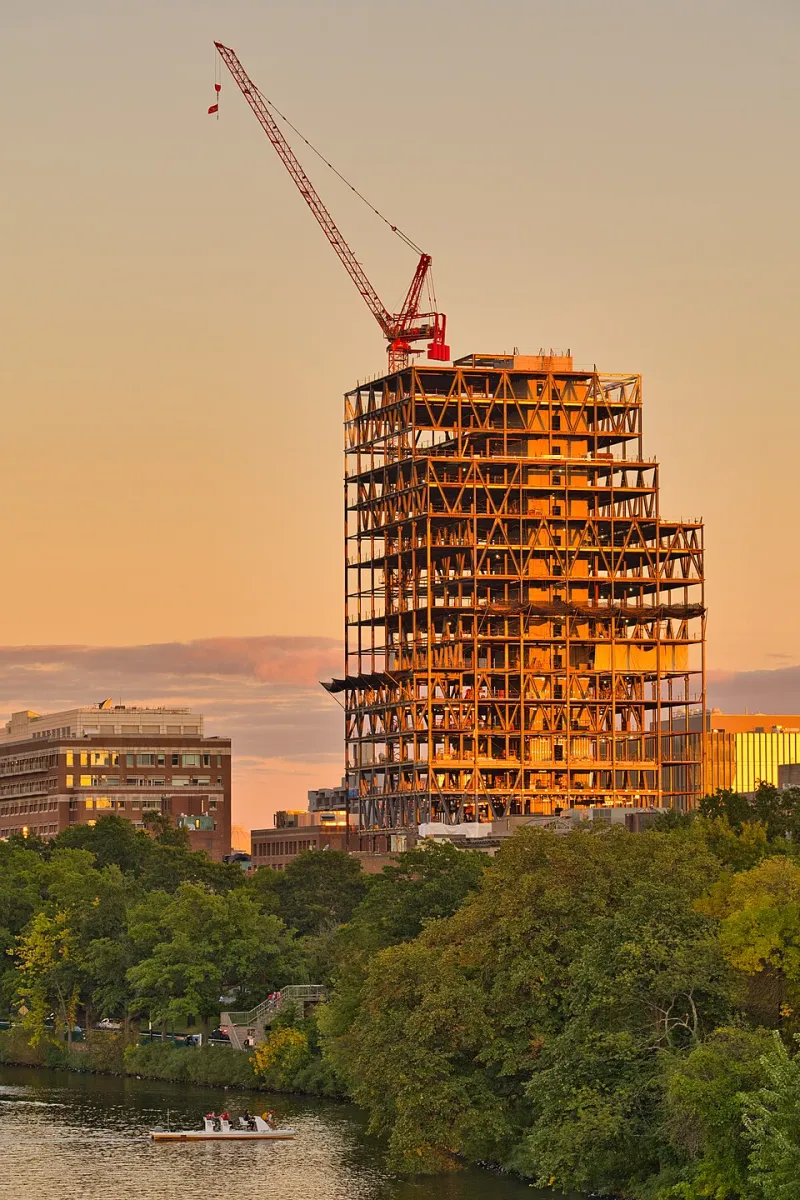
Photo: Chris Rycroft from Cambridge, Massachusetts, United States, CC BY 2.0, via Wikimedia Commons
You've seen the rendering: a glass box in a wildflower meadow with a flagpole and a suspiciously blue sky. You've heard the number: a million square feet, hundreds of millions in investment, "hundreds of jobs." Now the board is scheduled to vote, and the only thing standing between the picture and the shovel is a stack of paper nobody mentioned at the open house.
That paper has a name. Usually it's a development agreement, sometimes a performance agreement, occasionally a memorandum of understanding that everyone insists is non-binding right up until it isn't. It will not be near the front of the packet. It will be Attachment C, or Exhibit 4, or a 70-page PDF stapled onto the end of a two-page fiscal note. The vote is on the resolution. The deal is in the attachments.
The packet is built to be skimmed
Staff reports are written to be read aloud in five minutes. They summarize. They say "favorable fiscal impact" and "consistent with the comprehensive plan." That's the summary. The attachments are the terms, and they were drafted by lawyers paid by the hour to protect the company's downside.
If your city or county posts agendas through a portal like Legistar, Granicus, or CivicClerk, the packet is usually a single downloadable file posted a few days before the meeting — sometimes the Friday before, sometimes Wednesday at 4:59 p.m. Open the PDF and search for words like abatement, PILOT, grant, reimbursement, utility, indemnif, and clawback. That's your table of contents.
Clause one: what, exactly, is being discounted
Data centers are expensive buildings full of equipment that can be depreciated fast. The incentive usually splits along that line. Many states already exempt or partially exempt business equipment from the property tax, so the county's real leverage is the shell, the land, and the improvements.
Look for whether the abatement covers land, buildings, equipment, or all three — and whether it steps down over ten or fifteen years. A common structure is a payment in lieu of taxes: the company pays a negotiated amount instead of the assessed bill, often on a schedule with a floor. A PILOT isn't automatically a bad deal. Sometimes it's steadier than a decade of assessment appeals. But you need the negotiated number next to the assessor's estimate. If the staff report says "$40 million over 20 years," ask what the un-abated bill would have been over the same period. Both numbers should appear in the fiscal impact statement. If only one does, request the other.
Clause two: the water
Ask for gallons per day, peak demand, and who pays for the pipe. Data centers use water for cooling and, more urgently, for fire suppression — a large facility may require a dedicated main and a storage tank. If the utility is an enterprise fund, the upgrade gets paid by ratepayers and recovered through rates. The developer's contribution might be capped at a figure that hasn't been revised since the subdivision was platted. That single line determines whether your bill climbs.
Also ask whether the county reserved capacity. A "will-serve" commitment signed this year can quietly foreclose a housing development in 2031.
Clause three: the jobs number
"Hundreds of jobs" is almost always a construction figure blended with an operations figure. Construction work is temporary and often filled by crews that travel. Operations jobs at a hyperscale campus are real but few — a very large facility might run on a few hundred full-time equivalents once security contractors and maintenance vendors are counted.
So check the definitions. Does the agreement define "full-time equivalent"? Does it set a wage floor? Does it require local hiring, and does it count contractors? And check the verb. Shall maintain is enforceable. Intends to create is a press release in a suit.
Clause four: the exit
The clause nobody reads until the company leaves. Three questions. If the investment or job targets are missed, does anything get clawed back — and does the trigger fire on a shortfall, or only on outright abandonment? Is the obligation backed by a letter of credit or a bond, or just a promise? And if the facility goes dark, who pays to demolish a windowless box on a hundred acres that nobody wants to re-lease?
Data center shells are close to single-purpose. Decommissioning bonds are routine in other heavy industries. Ask whether one is here.
The costs that never make the slide
New substation and transmission work — the utility may want the county to guarantee a minimum load. Road widening for construction traffic. Fire equipment and training. A water main extension. Sometimes a tax increment district that diverts new revenue from schools and libraries for twenty years. Ask the finance director for the debt service schedule tied to the project. If the county issued bonds to build infrastructure before the PILOT checks arrive, you're looking at the interest cost of believing a projection.
Then call your electric utility's regulatory affairs office and ask whether large-load customers in your state get a special tariff. In some places the answer is yes, and the cost of serving a round-the-clock load lands on the residential rate class. That's a state commission question, not a city council one — which is exactly why it slides past the local vote.
Five questions with a yes-or-no answer
- Is the complete development agreement in the packet, or will it be finalized after the vote?
- What is the assessor's estimate of the tax bill without the abatement, in writing?
- What is the facility's committed peak water demand, and who pays for the capacity upgrade?
- Does the agreement include a clawback secured by an actual financial instrument?
- What is the total public infrastructure cost, and how is it financed?
Get five answers and you're ahead of most rooms. Get three "we'll follow up on that" responses and ask that the follow-ups be read into the record before the vote.
The ribbon cutting will be lovely. The contract is the thing.