Your Address Didn't Change. Your City Might Have.
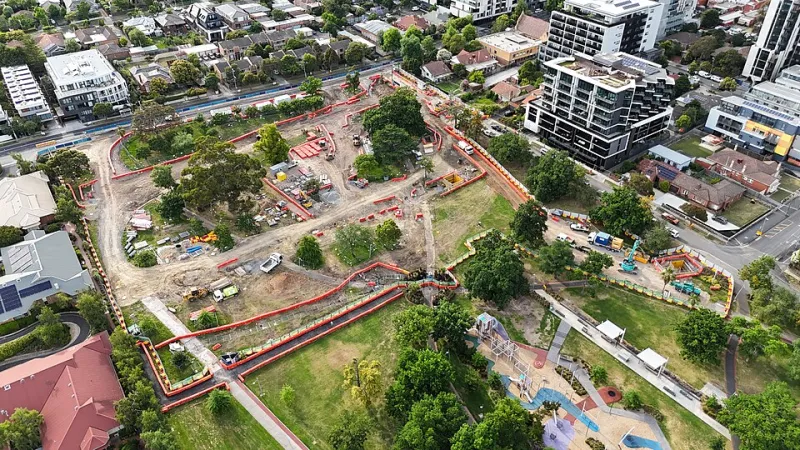
Photo: Philip Mallis, CC BY-SA 2.0, via Wikimedia Commons
You usually find out at a counter. You're standing there with a permit application, a utility hookup form, or a question about where the fence is allowed to go, and the clerk says something like: that address is in the city now. Nothing about your property changed. Same lawn, same driveway, same mailbox. But the invisible line that decides who taxes you, who zones you, and whose council members you vote for has quietly moved.
Annexation doesn't make headlines the way a rate hike or a rezoning does. It runs on a schedule, in packets, through ordinances numbered in the hundreds. And by the time most people notice, the map is already drawn.
What actually changes when the boundary shifts
People hear "annexation" and think one thing: higher taxes. Sometimes that's true and sometimes it isn't, but it's the least interesting part of the story.
When your parcel joins a city, several things happen at once:
- The tax bill gets a new line. You stop paying for county-only services and start paying city property tax, and in commercial corridors, the city's sales tax may now apply.
- A new set of rules applies to your land. Counties in most states are relatively hands-off about what you can build. Cities are not. Setbacks, lot coverage, short-term rental rules, fence heights, driveway widths — all of it can shift overnight.
- Services get a new provider, for better or worse. Police response, fire coverage, trash pickup, water and sewer. A service plan is supposed to spell out what you're getting and when.
- Your ballot changes. You gain a city council district and lose the ability to vote on some county-level matters. City bond elections now apply to you — and so does the debt they authorize.
- Code enforcement gets a phone number. That's a genuine benefit to some neighbors and a genuine headache to others.
The honest framing is this: annexation is a trade. More services and more regulation, usually with a bigger bill attached. Whether the trade is a good one depends heavily on the details in a document most residents never open.
Why cities pick one block and skip the next
Annexation almost never proceeds parcel by parcel in a tidy line. Cities are usually chasing a few specific things:
Contiguity. Most states require annexed land to touch existing city limits. That single rule explains a lot of oddly shaped maps, including the long "strip" annexations that run down a highway to reach a shopping center.
Islands. An unincorporated pocket completely surrounded by the city is awkward for everyone — split policing, split road maintenance, split voting. Cities tend to want these cleaned up.
Tax base. Retail corridors and warehouses generate sales and property tax revenue without generating many service demands. Residential subdivisions generate the opposite. Watch which one your neighborhood is near.
Utility lines. If the city already owns the water main under your street, the arithmetic of annexing you gets a lot simpler.
The growth plan. Most cities keep a comprehensive plan or future land use map that flags areas intended for eventual annexation. That map is public, and it's the closest thing to a preview you'll get.
The service plan is the part to read out loud
Nearly every state that allows annexation requires a service plan: a document stating what the city will provide, at what level, and by when. Read it like a contract, because that's essentially what it is.
Look for dates, not adjectives. "Enhanced police protection" means nothing. "A patrol unit assigned to the area within 24 months of the effective date" is something you can hold someone to. If the plan promises sewer in year three and the city's capital budget shows no sewer project for a decade, that's a legitimate, specific, and hard-to-wave-away comment at a public hearing.
The consent question, state by state
The rules here are wildly uneven, and they've been rewritten repeatedly over the past decade. Some states let cities annex almost unilaterally with a notice period. Others require landowner petitions, allow protest petitions that trigger arbitration or a vote, or require a public election before anything moves.
This matters enormously, because it determines whether your leverage is a lawsuit, a petition drive, or a two-minute microphone slot. Find your state's annexation statute — usually one chapter in the state code — before you decide which one you're in. A local librarian or a land-use clinic at a nearby law school can point you to it faster than a search engine will.
Where the paper trail actually lives
- Council agenda packets. Annexation items typically show up as an ordinance with a service plan attached, often months before the final vote. Start there.
- Planning commission minutes. The discussion happens here first, and it's usually more candid than the council version.
- Your county appraisal district. Parcel records list which taxing jurisdictions apply to each property. You can watch the jurisdiction list change.
- The newspaper of record. Legal notices for annexation hearings are published here, often in a section nobody reads. Set an alert for your address and your subdivision name.
- The city's GIS viewer. Many cities publish a future land use or annexation map layer. Compare it to your parcel.
How to push back while the map is still wet
- Confirm your actual status. Call the county and the city and ask, in writing, which jurisdiction your parcel sits in today.
- Request the service plan and the fiscal analysis if one exists. Both are typically public records once the item is on an agenda.
- Show up early. The planning commission stage is where technical questions get answered. By the council vote, the votes are often already counted.
- Comment in specifics. "Our well fails in drought years and the plan doesn't mention water until phase two" lands. "We don't want to be in the city" doesn't.
- Ask about the tax rate, not just the tax bill. A city with a lower rate but a higher assessed value can still cost you more.
- Talk to your county. They lose the tax base and often have an interest in the outcome, even if they can't stop it.
- Check the clock. If your state allows a protest petition, the window is typically short and requires a specific percentage of landowners or residents. Missing it by a week is the same as missing it by a year.
The map gets drawn in public, quietly
Annexation is the rare local decision that changes your life without changing your commute. It doesn't arrive with a ribbon cutting or a press conference. It arrives in a packet, on a Tuesday, with an ordinance number and a service plan appendix.
Which means the plaza is open. The meeting is noticed, the documents are posted, and the microphone is on. The only real question is whether anyone from your street is in the room when the line moves — or whether the clerk at the counter is the first person to tell you it already did.