The Bench Is Public. The Rulebook Might Not Be.
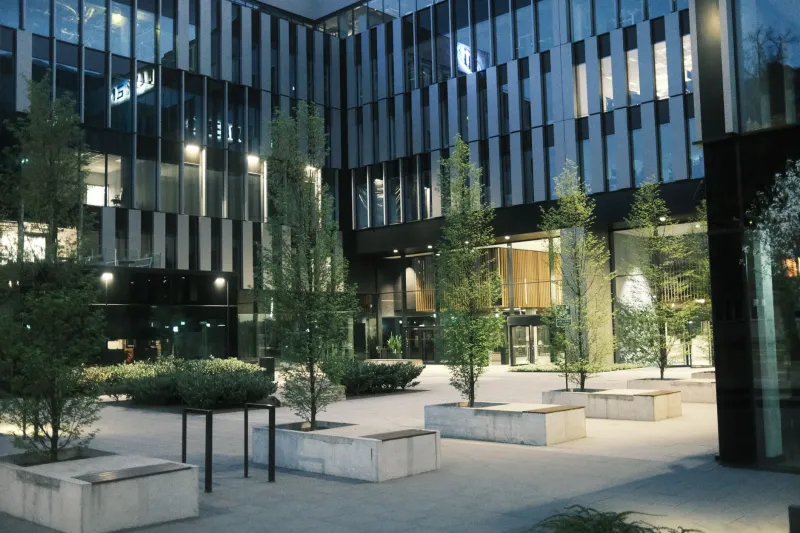
Walk through almost any newly built downtown in the U.S., and you will meet a familiar character: the plaza that looks public but answers to a private landlord. There are tables, planters, maybe a splash pad. A sign lists hours. A security guard asks someone to move along. The space is counted in the city’s open-space math, yet the rulebook may live in a filing cabinet at the planning department.
These places are often called privately owned public spaces, or POPS. The label is not an insult. Many are useful, well maintained, and genuinely open. But the arrangement is a deal, and deals have terms. If a plaza is going to serve as a neighborhood’s front yard, residents should know who holds the leash.
Start With the Vibe Check — Then Verify
A privately owned public space often announces itself in small ways. You might see a sign with building hours rather than park hours. You might see language about “owner rules,” “tenant access,” or “permitted events.” You might notice private security instead of park staff, or a lack of drinking fountains and public restrooms. A plaza that closes at 6 p.m. on a summer Saturday is giving you a clue.
But clues are not proof. A city park can have odd hours, and a private plaza can be generous. The real answer is in the paperwork. The trick is to stop asking whether the space feels public and start asking what the city agreed to.
Find the Site Plan, Not Just the Ribbon Cutting
Most POPS are born in the development review process. A project gets approved with a site plan that shows a plaza, an arcade, a pocket park, or a through-block passage. In exchange, the city may grant extra density, a height bonus, a parking reduction, or credit toward open-space requirements.
To find the terms, start with the address and the project name. Search your city’s planning or permit portal for the site plan, staff report, and planning commission agenda. Then ask for the development agreement. That is the contract that often carries the public access promise, the maintenance obligations, and the enforcement language.
Useful records request phrases include: public access easement, maintenance agreement, open space covenant, declaration of restrictions, reciprocal easement agreement, and POPS. You do not need to know which one exists. Ask for all records mentioning public access at that address. A good clerk will help you narrow it down.
Read the Easement Like a Neighbor, Not a Lawyer
You are not trying to write a legal brief. You are trying to answer five practical questions.
First, what exactly is public? Is it the whole plaza or a painted rectangle? Are benches, tables, restrooms, or shade structures included? Second, what hours apply? Third, who maintains the space, and what happens if they stop? Fourth, can the owner close the space for private events, construction, or security reasons — and for how long? Fifth, who enforces the deal if things go sideways?
Pay attention to whether the city got a public access easement, a dedication, or a covenant. An easement is a right to use someone else’s property. A dedication usually transfers something to the public. A covenant is a promise attached to the land. These are different tools, and they carry different leverage. If the document is recorded, the county recorder’s office should have it. Ask for the recording number.
When the Plaza Starts Acting Private
Suppose the tables disappear, a gate goes up, or a sign appears saying the space is for customers only. Your first move is not a shouting match. It is a dated photo and a short email to the planning department and the city attorney’s office. Ask a specific question: “Does the public access easement for this address allow this closure, and who is responsible for enforcement?”
Attach the photo. Cite the address. Ask for the city’s interpretation in writing. If the space is counted in the city’s open-space inventory, copy the parks department too. If the city has been treating the plaza as a public park in its plans, that is relevant.
You can also ask code enforcement whether the site is complying with its approved plans. And you can request inspection records, complaints, and maintenance logs. A pattern of complaints is often more persuasive than a single bad afternoon.
A Short Script for the Counter
At a public meeting or a planning counter, keep it plain. Try: “Can you point me to the recorded easement and the maintenance clause?” Then: “What are the allowed closure hours?” Then: “Who enforces this, and what has the city done when it was violated?” Finally: “Is this space counted in our open-space inventory?”
Those questions are hard to wave away. They do not require you to be an attorney. They just require the city to show its work.
The Bigger Ledger
Privately owned public space can be a real asset. It can add shade, seating, and a place to eat lunch downtown. But it should not quietly replace the public park that a neighborhood was promised. When cities count these spaces toward open-space goals, residents deserve to know the trade.
So the next time you sit on a bench in a handsome plaza, look for the sign. Then look for the site plan. The bench may be public. The rulebook might not be. And the difference is usually a public record away.