Who Can Afford a Tuesday Morning Committee Meeting?
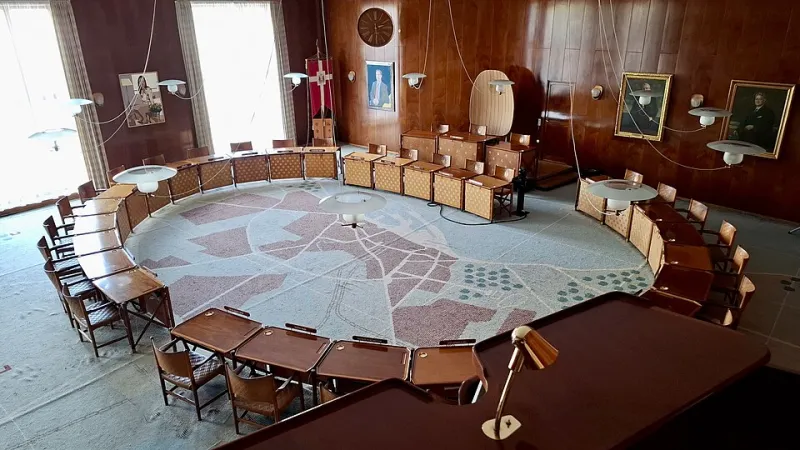
Photo: Ciara Ní Riain, CC BY-SA 4.0, via Wikimedia Commons
I once sat through a planning commission hearing that started at 4:30 on a Wednesday afternoon. The room held eleven people. Nine were applicants, their attorneys, or consultants on the clock. One was a retired man with a folder of photographs. One was me, getting paid to be there.
Nobody under forty spoke that night. Not because younger residents don't care about a rezoning two blocks from their apartment. Because at 4:30 on a Wednesday, they were on a shift, in a car, or standing in a daycare pickup line.
Access is set by the calendar, not the charter
Most state open-meetings laws require notice, a quorum, and minutes. They do not require a time that working people can reach. That part is left to board rules, staff preference, and habit — and habit is the strongest of the three.
Ask when your city last reviewed its meeting schedule as a policy question rather than a scheduling one. In a lot of places, the answer is never. The 5 p.m. start exists because it always has, and the 10 a.m. public comment slot exists because the agenda sequencing worked out that way once and nobody moved it.
That's not malice. It's inertia. But inertia has a bias, and the bias is toward people with flexible jobs, cars, and someone else to handle dinner.
Three filters, in order of damage
The start time. A 4:30 or 5:00 p.m. meeting assumes a desk job with some slack in it. Nurses on a 7-to-7, restaurant staff, retail, warehouse second shift, and anyone who rides a bus with a transfer gets filtered out at the door — before a single word of testimony is heard.
The remote rule. A lot of boards kept the cameras through 2022 and then quietly dropped them. Others kept hybrid access but wrapped it in friction: register 24 hours ahead, call in with no video, one comment window only, no ability to hear the discussion if the room audio cuts out. Friction is a filter even when the door is technically open.
The packet and the comment window. A 300-page agenda packet posted Friday for a Tuesday vote is not a document a working person can read. Neither is a comment deadline that closes before the meeting starts. Residents get two minutes and staff gets fifteen, which is a defensible ratio but a revealing one — and written comments, when they're accepted at all, are often summarized by staff into a single line.
The counterarguments deserve a fair hearing
Staff overtime is real. Late-night decisions are worse decisions — there's decent evidence that boards make sloppier calls after 10 p.m., and the people who stay to the end are usually the ones with the most at stake. Some states genuinely limit remote voting. Audio-visual equipment costs money, and a bad hybrid setup can be worse than none.
All true. But every one of those is a trade-off, not a law of physics. The question is who currently absorbs the cost of the status quo, and whether anyone has ever written that down.
Six questions worth putting in writing
- What is the formal process for changing a meeting start time, and when was it last reviewed?
- How many public comments did the board receive in person, in writing, and remotely last year?
- Do written comments carry the same weight as spoken ones, and what is the deadline?
- Is there a rotating schedule, or could one be adopted for evening committees?
- How many days before a meeting is the packet posted, and can that become seven?
- Is interpretation available, how is it requested, and is that posted anywhere a resident would find it?
The second question is the useful one. Boards are often surprised by their own numbers. A clerk who tallies comment channels for a year can produce a chart that settles an argument faster than any op-ed, including this one.
The cheap fixes
Rotate committee times quarterly so no single shift always bears the cost. Keep hybrid access with no pre-registration. Accept written comment up to 24 hours before the vote and read a summary into the record. Post packets a week out. Publish a one-page plain-language guide to commenting and put it on the homepage instead of three clicks deep. Record everything and timestamp it.
None of this is expensive. Some of it is free. What it costs is a vote to change a habit.
Nobody at your city hall is trying to exclude you. That's the discomfiting part — exclusion doesn't require intent. It requires a Tuesday morning meeting that no one has ever thought to question. The clock is a filter. The only question is whether you want it to keep doing that job.