The 25 MPH Sign Was a Committee Decision: A Resident's Guide to Traffic Calming
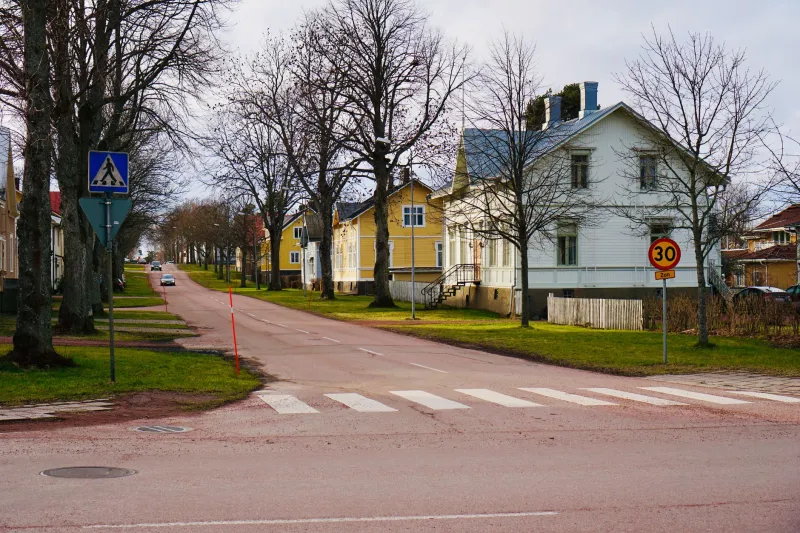
The 25 mph sign at the corner is easy to ignore. It is also a decision, made by someone, based on something, with a budget and a priority list behind it. Most of us experience local government at exactly that speed: school-zone flashers, a speed hump that rattled the coffee, a crosswalk that appeared after years of asking. The sign looks permanent. The process that produced it is anything but.
Speed Limits Are Not Weather
In most U.S. cities, the posted limit is not a force of nature. It is a legal choice shaped by state statute, engineering practice, and local politics. Many states set a default urban speed, often 25 mph, and let cities adjust from there. But the number on the sign usually follows a study, a petition, or a council vote. That means it can be discussed, challenged, and changed. It also means someone had to ask.
This is the first mental shift for any resident who wants calmer streets: stop treating the sign as scenery and start treating it as a record. It records who showed up, what data counted, and which streets made the cut. In 2026, as more cities juggle safety goals against limited public-works budgets, that record is worth learning to read.
The Study Behind the Sign
The first document to request is the speed study. Engineers typically measure free-flowing traffic and look at the speed at or below which 85 percent of drivers travel. That 85th percentile number is controversial, and it should be. It can reward existing bad behavior if the street is designed like a highway. But it is still the number many cities use to justify a limit.
Ask for the raw counts, the dates, the time windows, and the roadway context. A 25 mph sign on a wide arterial with no sidewalks is not the same as one on a narrow residential block with parked cars and kids walking to school. If the city has crash data, request that too. If it has pedestrian and bicycle counts, ask for those. You do not need a planning degree to notice when the posted number and the street design are having an argument.
Decode the Menu
Traffic calming has its own vocabulary. A road diet usually means reducing the number of travel lanes and reusing the space for turn lanes, bike lanes, parking, or wider shoulders. Traffic calming is the umbrella term for physical changes such as speed humps, raised crosswalks, curb extensions, chicanes, and narrowed lanes. Paint and post refers to cheaper fixes made with markings and flexible bollards. Vision Zero is a policy goal to eliminate traffic deaths and serious injuries, not a single mandated design. Complete Streets is a framework for designing roads for all users, not just cars.
When staff says there is no program for your street, ask what programs do exist and how projects get ranked. Some cities have residential traffic-calming petitions. Some have school-zone safety funds. Some fold these projects into the capital improvement plan. The menu matters because it tells you what kind of ask is realistic.
The Petition Threshold
Many cities require neighbors to organize before a residential street is even studied. The threshold might be a percentage of frontage property owners, a block club vote, or a set number of signatures. Get the exact rule in writing from public works or the city clerk. A petition is not a referendum on whether speeding is bad. It is an entry ticket to the process.
That distinction saves time. If the rule requires signatures from two-thirds of households on the block, a petition with 12 angry names from one end of the street may not qualify. If the city requires a formal request from a registered neighborhood association, find out who those officers are and when they meet. The paperwork is boring. It is also the difference between a complaint and a case.
Build a Case, Not a Complaint
Staff can act on documentation. People speed is a feeling. A log of dates, times, observed behavior, and photos is evidence. Ask neighbors to note school bus stops, cyclists, pedestrians, and near misses. Request crash reports for the corridor. Take photos that show the street context, not just a blurry license plate.
Then make a specific request. Ask for a speed study, a crosswalk warrant analysis, or a traffic-calming petition. Ask where your street ranks on the city's priority list and what would move it up. Understand that most public-works departments have more requests than money. A calm, organized ask is more useful than a loud one, and it is more likely to survive staff turnover.
Where the Politics Enters
Speed limits are set by state law and city ordinance, but the money and priorities are political. The capital improvement plan, the annual budget, and council district allocations all shape which streets get attention. Ask your council member where your street ranks. Attend the meeting when the project list is adopted, not only after the sign fails to appear.
This is the civic-plaza part of the story. The sign is not a technical artifact dropped from the sky. It is a decision made in public, or at least in a public building, by people who respond to organized neighbors. You do not have to become a traffic engineer. You do have to learn the menu, bring the data, and show up before the decision is final.